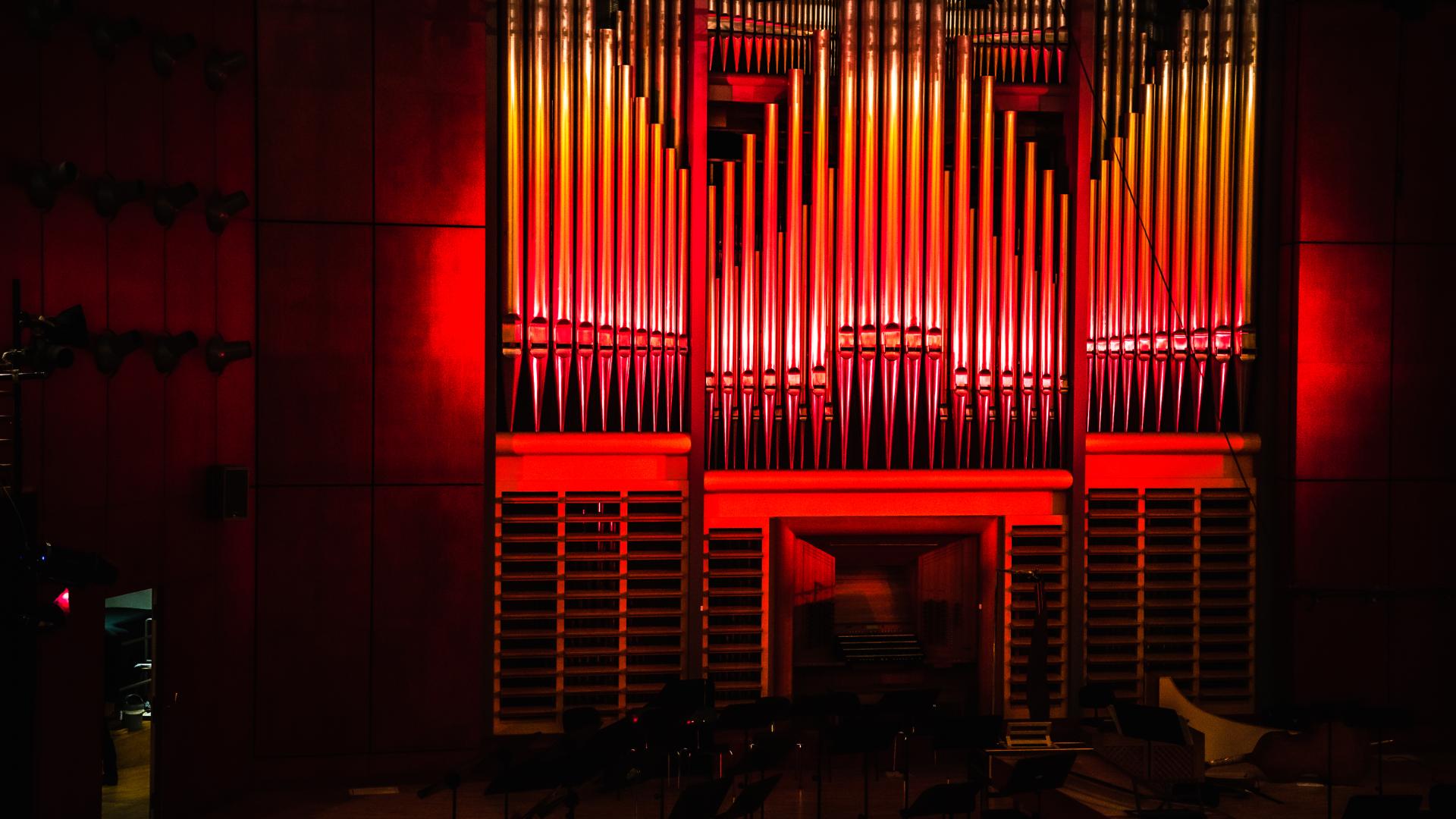
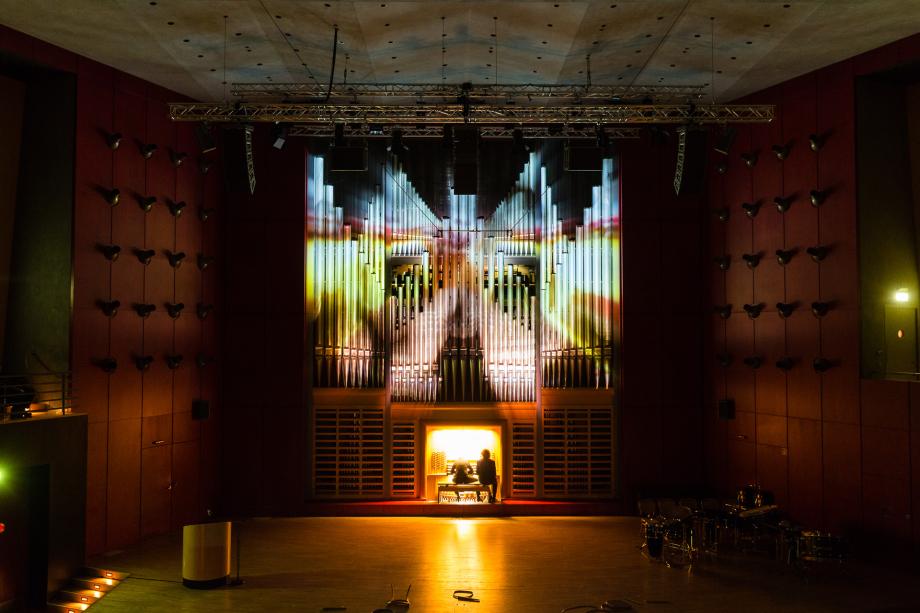
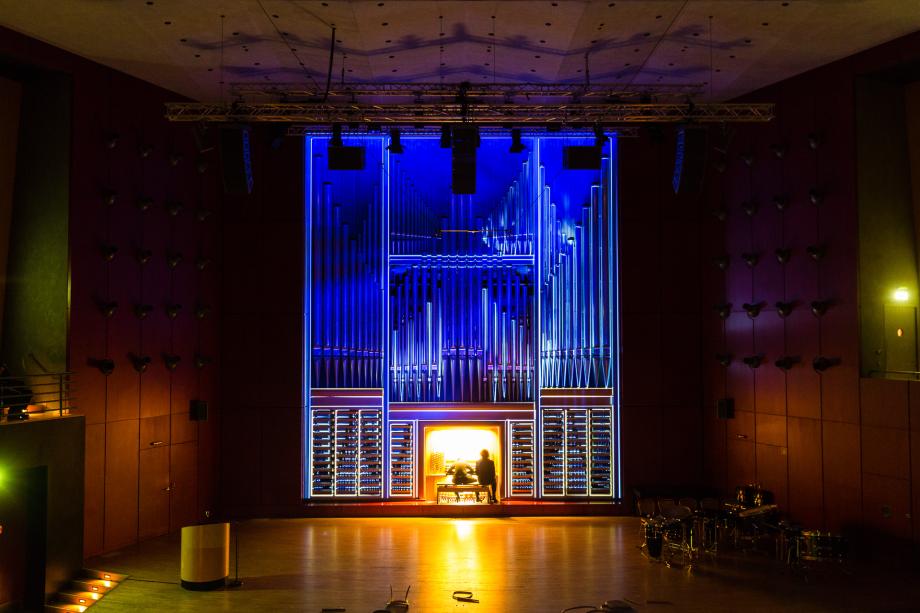
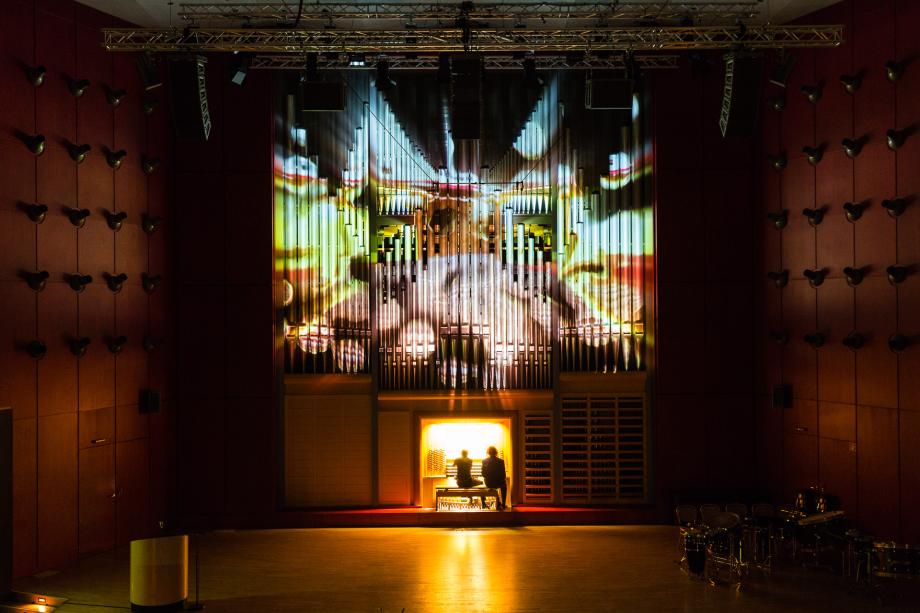
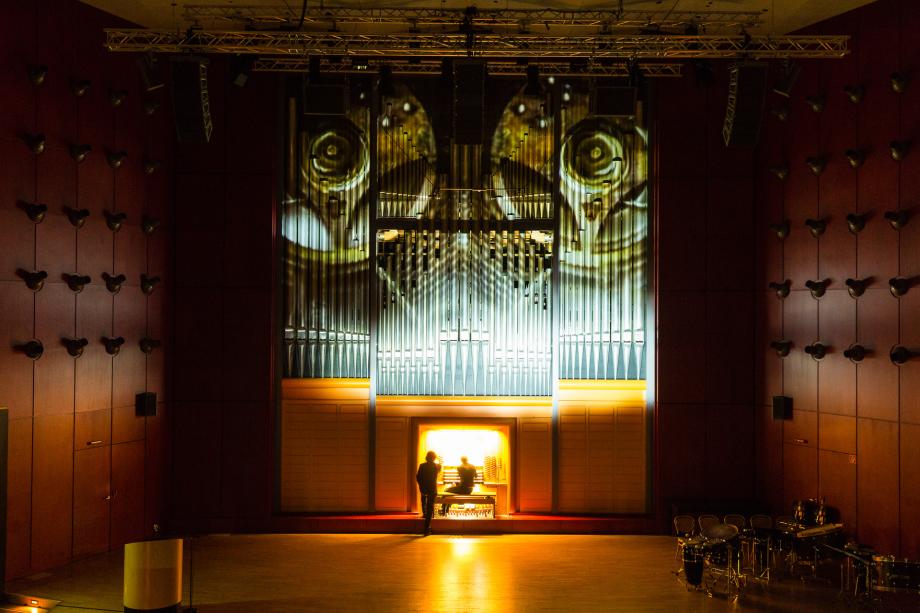
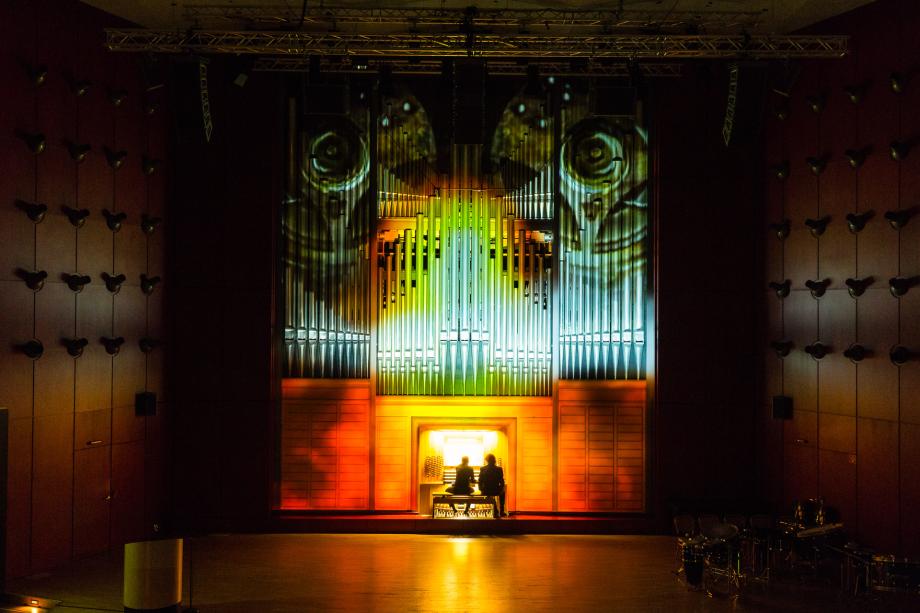
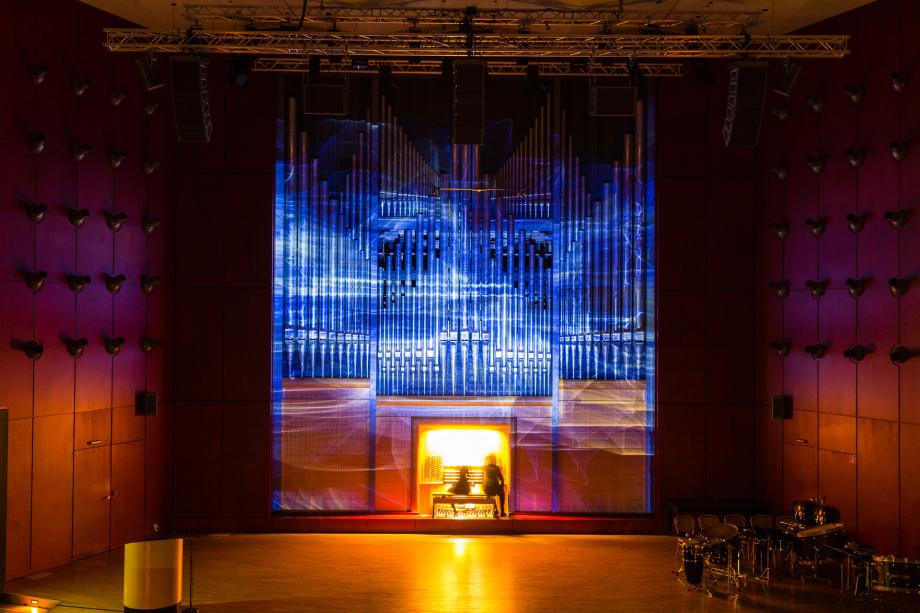
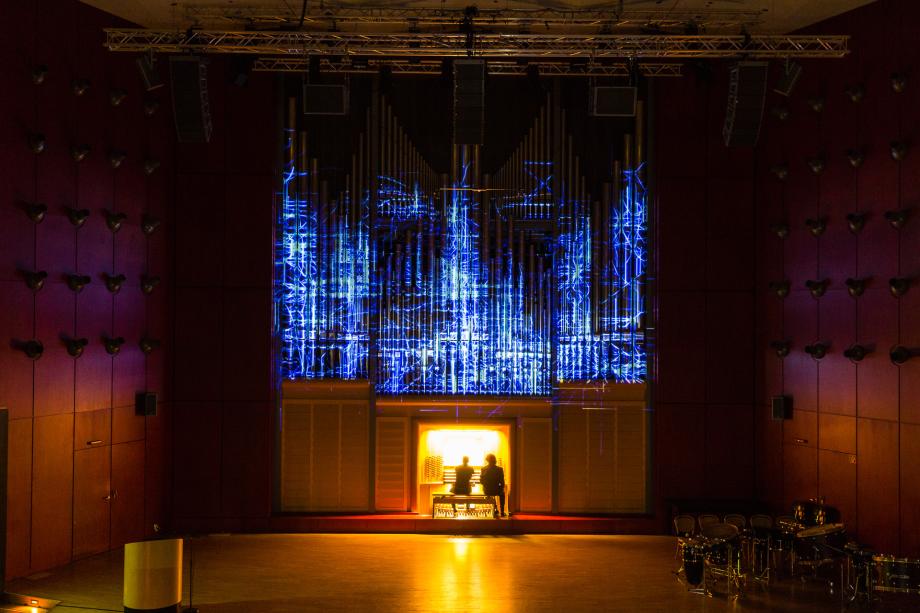
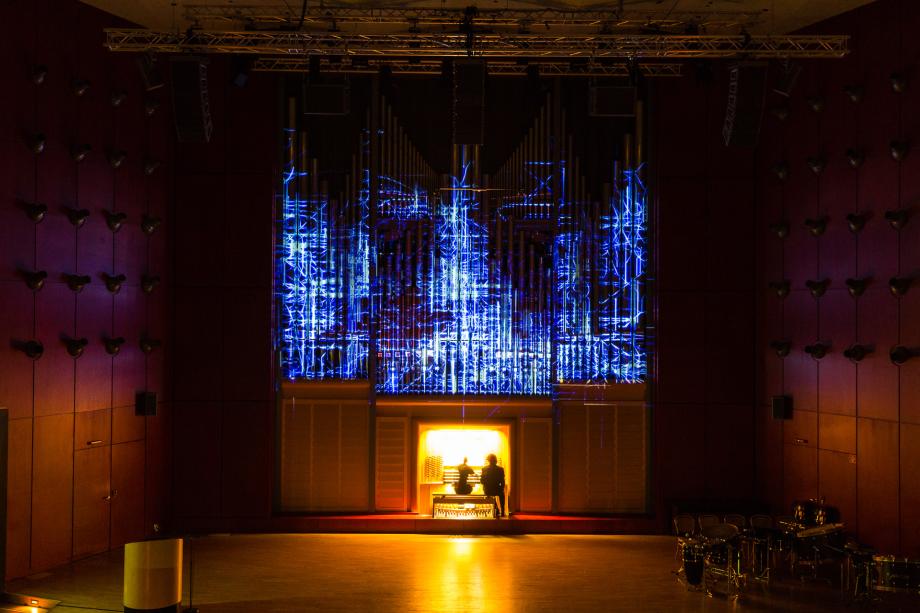
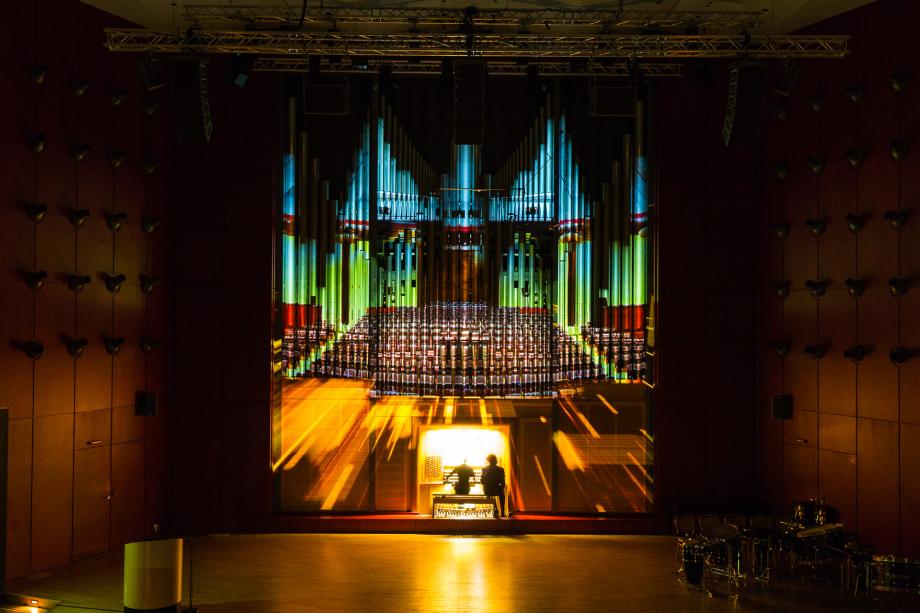
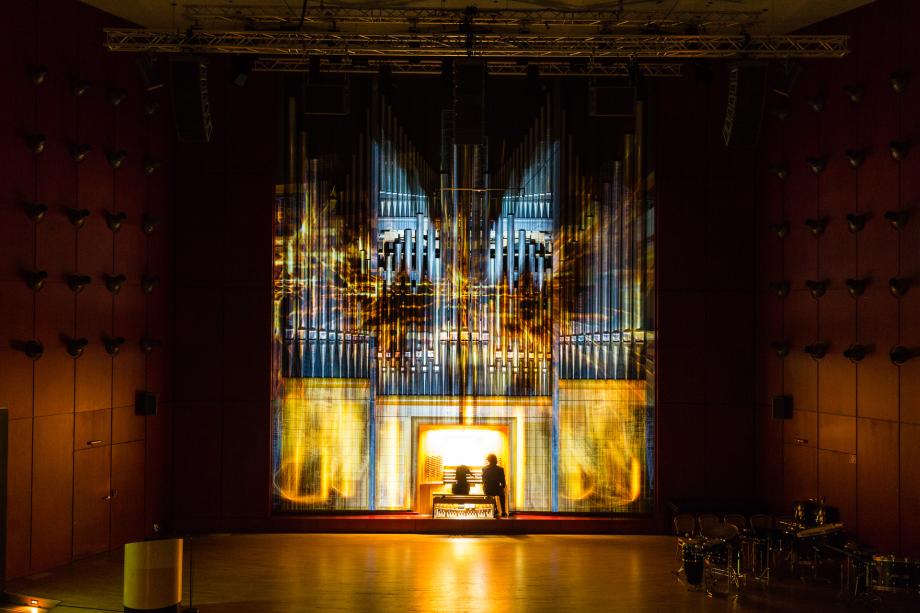
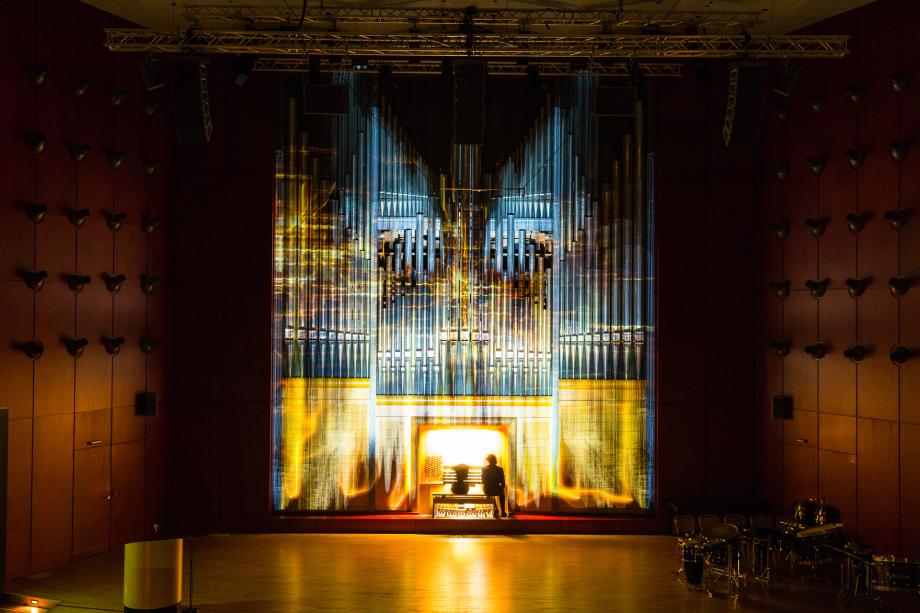
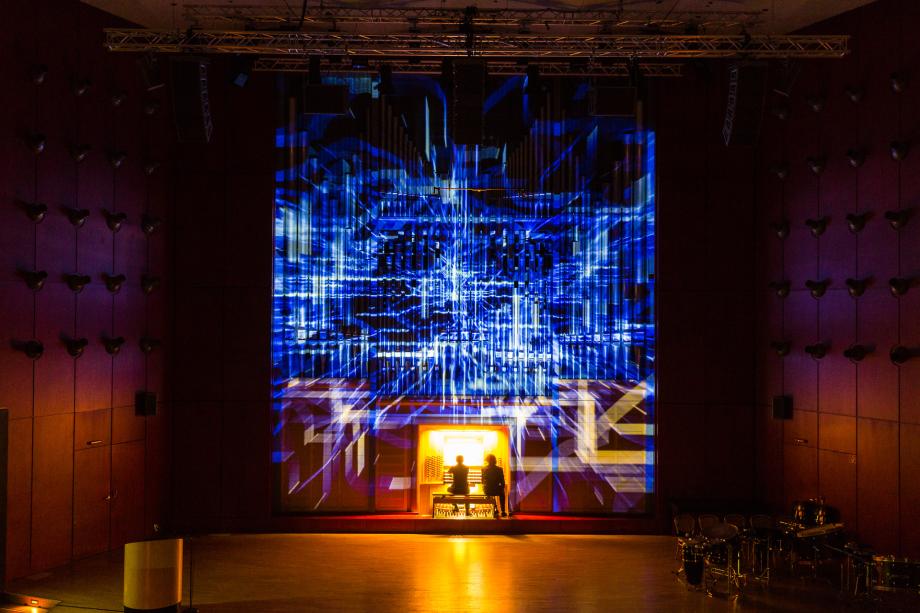
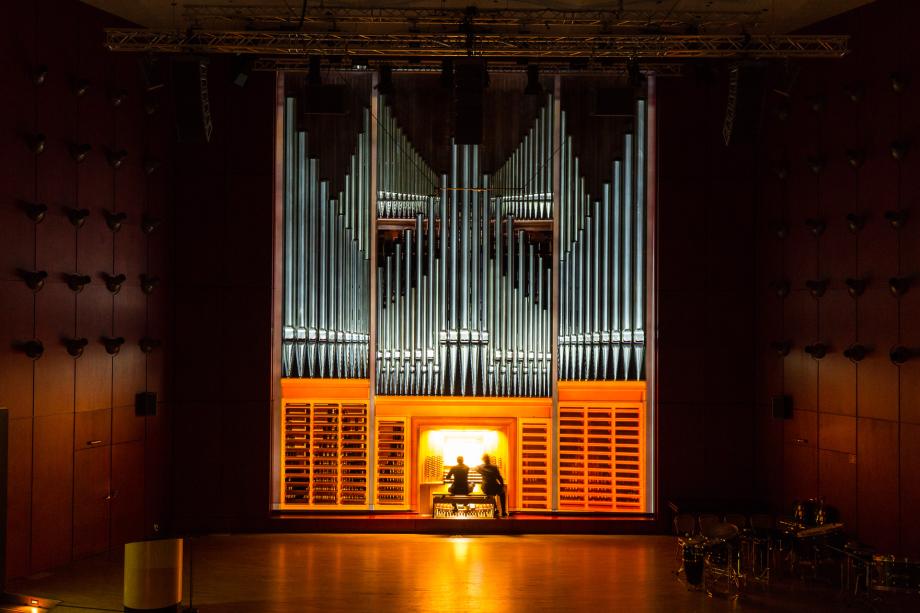
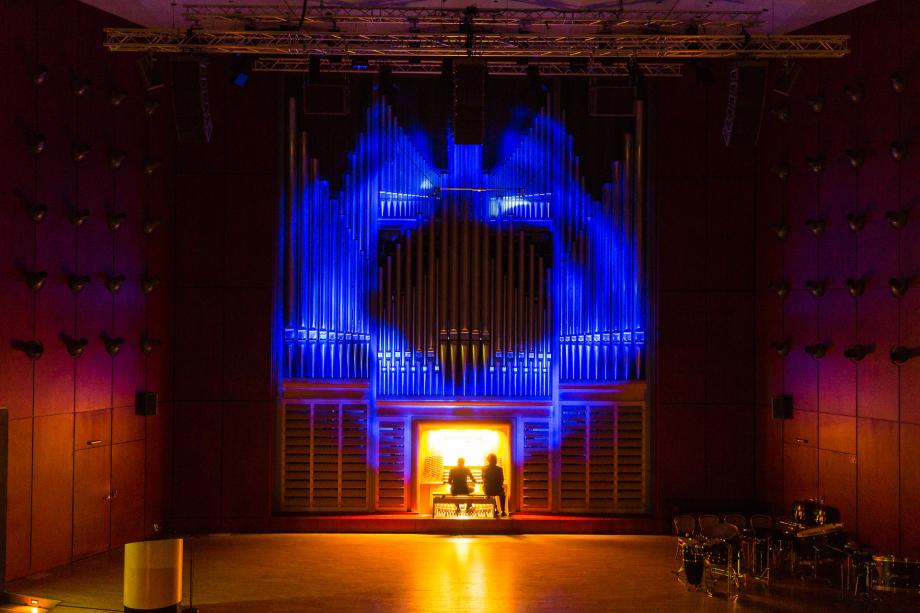
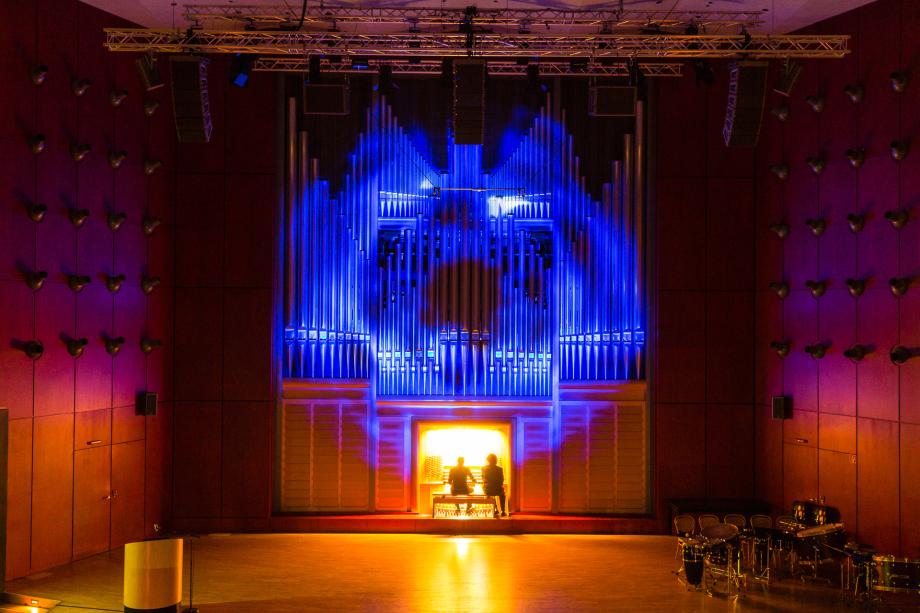
The fruits of their years of work on perfecting their organ playing must – or must - be demonstrated by the students on the concert hall organ. Almost all final examinations in organ literature take place here, and that is why this organ must be able to slip into many different roles like a good actress. The problem with such a "universal organ" is that while theoretically it should serve the entire organ repertoire, it can never do so with the same quality as stylistically specific instruments in individual cases. Just compiling all the necessary stops would result in an instrument that would be technically complex, perhaps not even feasible according to the standards of good organ building aesthetics, and sound acoustically diffuse. Even if limited to a few selected stylistic areas, compromises are necessary, especially in the intonation, as stops of the same name and essentially the same construction can exhibit significant tonal differences in different time periods and national styles. To minimize this problem, an experienced and sensitive voicer is needed to meticulously plan and refine the sound of each individual pipe in detail, in addition to thorough conceptual considerations in the disposition.
Although we did not "reinvent the wheel" in the latter, we have certainly taken a radically new approach in terms of the basic design of the organ, which has since been adopted in other organ projects in concert halls around the world. The starting point was the determination of the repertoire areas of organ music that this organ had to primarily serve. These are, in addition to Bach's music, primarily German and French compositions of the 19th and early 20th centuries as well as contemporary music, the latter requiring hardly any consideration in the disposition due to historical reasons.
The organ builder Gottfried Silbermann can be seen as the intersection of the three aforementioned stylistic areas. On the one hand, he introduced a strong classic-French component into central German organ building, and on the other hand, his very successful work continued well into the 19th century: especially among central German organ builders, a tonal core inspired by Silbermann can still be observed in the second half of the 19th century, around which modern, romantic elements are grouped. Silbermann's tonal foundation not only allows for a German-Romantic sound but also a French-Symphonic sound, as Aristide Cavaillé-Coll continued using larger 18th-century instruments in some of his great organs.
These three stylistic spheres were distributed across the four manuals as follows: The first two manuals, as the Hauptwerk and Oberwerk arranged one above the other in the middle of the prospect, follow Silbermann's conventions in the disposition with slight deviations and correspond, the disposition with slight deviations and correspond, with minor deviations, The third manual is a Swell division in the French-Symphonic style, the fourth a Swell division in the German-Romantic style, deliberately subdued dynamically in comparison to the other divisions. Both Swell divisions are positioned on the floor, directly next to the organ console, contrary to the historical practice of placing them rather high in the organ, but with a comparable acoustic effect: Through the horizontal swell shutters, the sound can be indirectly radiated towards the audience through reflection on the stage floor, while the majority of listeners, placed in the ascending rows of seats roughly at the level of the Hauptwerk, primarily perceive the Oberwerk very directly.
The technical realization of a four-manual organ with 80 stops and mechanical action with mechanical couplers places the highest demands on the organ builder in terms of technology and craftsmanship. The Rieger company (Schwarzach/Vorarlberg) had convinced us the most in this regard with several instruments of this size. Through the use of various technical tricks, they have managed to achieve a pleasant touch, which is still manageable even with four mechanically coupled manuals.
The challenging task for the voicer Klaus Knoth was to clearly accentuate the various tonal stylistic spheres on the one hand while bringing them together into a synthesis to homogenize the overall sound of the organ on the other hand. This square of the circle was solved in a highly convincing manner, taking into account the necessary voicing compromises: with proper registration, the organ can indeed slip into different sound garments and clearly mimic the sound images of stylistically specific original instruments. It is a musical chameleon.