


The history of the HMDK
The oldest music academy in Baden-Württemberg and the fourth oldest in Germany was founded in 1857. Initially called the "Conservatory for Music", it was renamed to "Royal Conservatory for Music" in 1869, indicating royal patronage by the King of Württemberg. Following the introduction of the Republic in 1921, it became the "Württemberg Music University". In its early decades, it served as both a training ground for professional musicians and a music school with a so-called "amateur class". It was only in 1921 that the two parts were separated, focusing solely on the university training.
In the 19th century, a piano school emerged in Stuttgart based on a popular textbook by the conservatory teachers (Lebert/Stark: Large Practical-Theoretical Piano School). In the early 20th century, two renowned pianists, Prof. Max Pauer (1907–1924) and Prof. Wilhelm Kempff (1924–1929), served as directors of this institution. In 1938, under the leadership of violinist Prof. Carl Wendling (1929–1940), the university was nationalized, securing its financial stability.
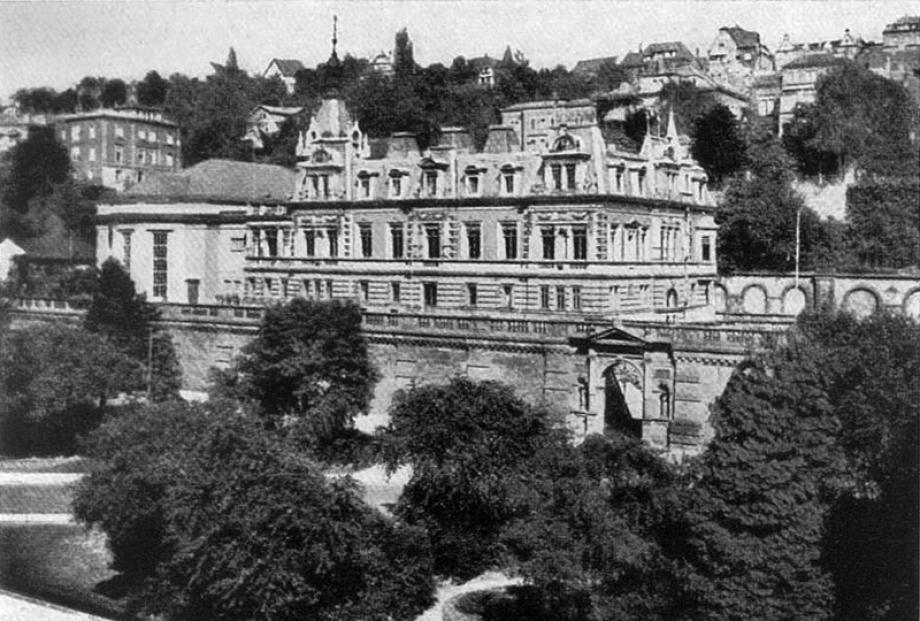
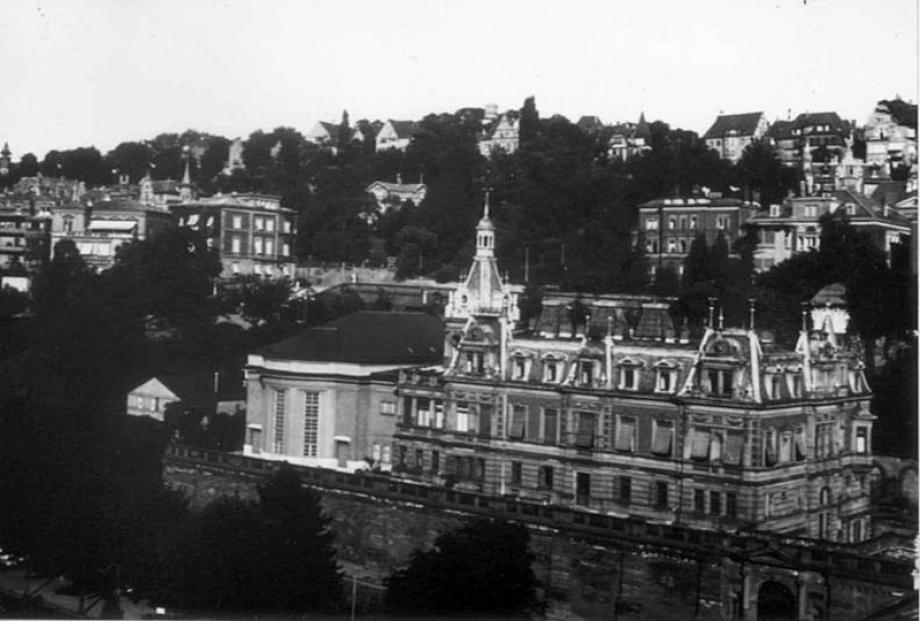
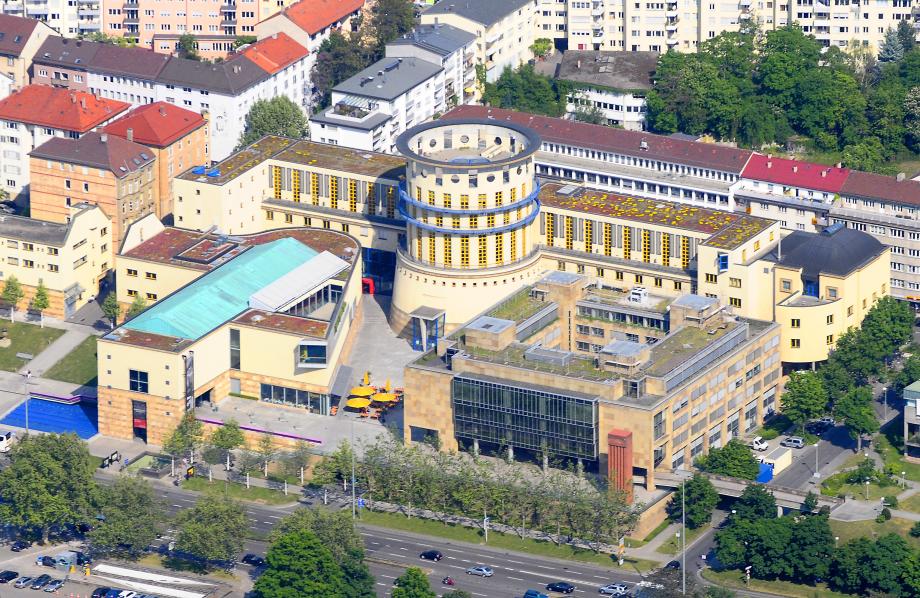
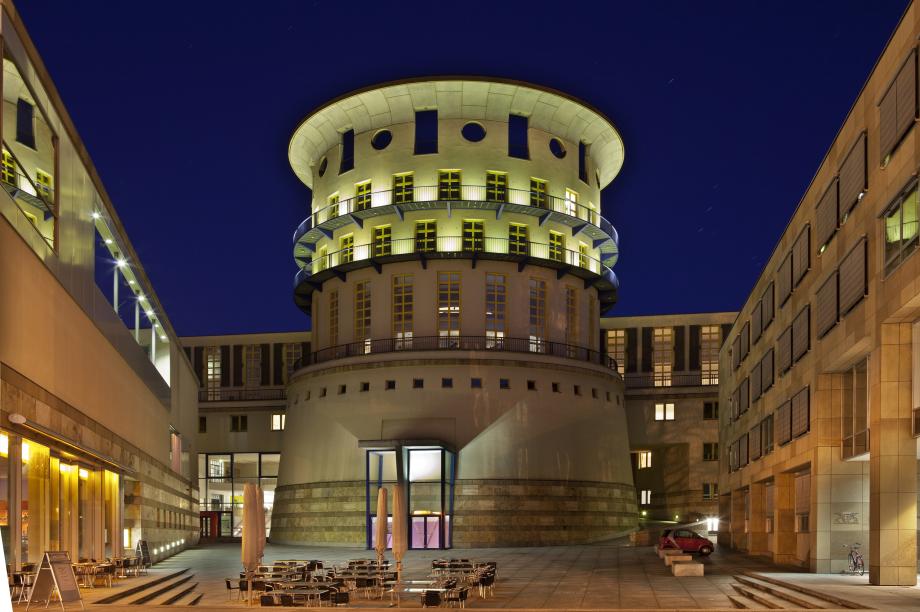
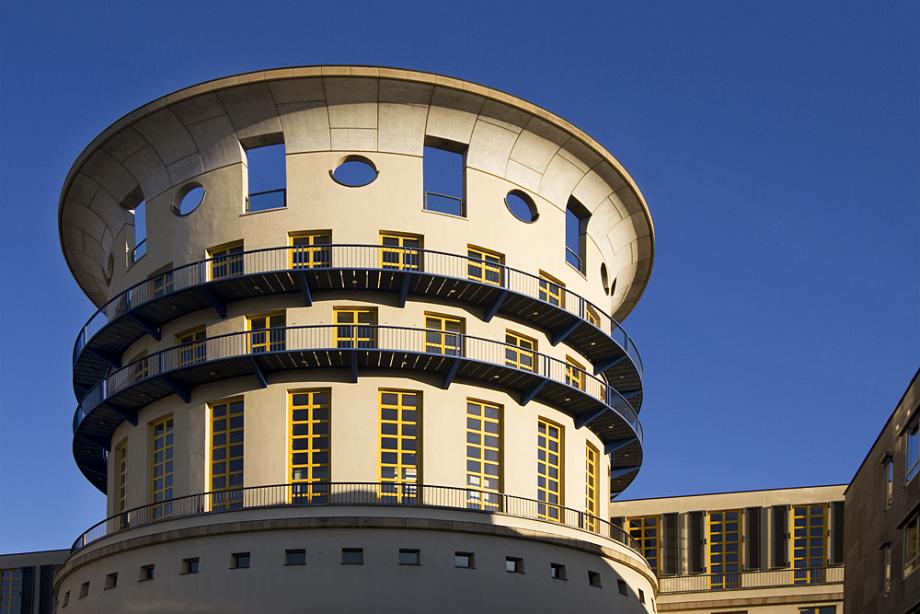
The Second World War severely affected the "State University of Music"; it not only lost its teaching building, Villa Schönlein at Urbansplatz, but was temporarily relocated to Trossingen with the support of the Hohner company until 1946. After years of temporary accommodations, a new building was finally inaugurated in 1955 at Urbansplatz. However, this building soon proved too small as student numbers grew to over 900 within a few years. As part of the development of the so-called "Cultural Mile" in the 1980s, a new building for the music university was planned in conjunction with the extension of the State Gallery. The result was a postmodern architectural ensemble of international significance designed by the British architects James Stirling and Michael Wilford. The completion of the second construction phase in 2002 marked the final architectural completion of the music university.
In the early 19th century, the Stuttgart Conservatory also served as a training ground for actors, but it wasn't until 1942 that a dedicated drama school was established. Consequently, in 1963, the university adopted its current name, "State University of Music and Performing Arts". In addition to the drama school, the university also hosts a highly regarded opera school, a speech art department recognized beyond the country's borders, and the unique puppet theater founded in 1983 in the old federal states. With the provision of the elaborately restored Wilhelma Theater (built 1837–1840), the university has had its own theater since 1987, which in its public perception rivals a professional city theater.
During the last decades, there has been significant progress in terms of personnel and artistic-pedagogical development. Under the directorship of Prof. Dr. Hermann Keller (1946-1952), the traditionally strong area of church music was further expanded; with a total of 11 organs, the university is now one of the best-equipped institutions in Germany for church music and concert organ playing. Numerous renowned composers have emerged from the Stuttgart University; the most prominent figure from recent times being Prof. Helmut Lachenmann. Since 1989, an extensively developed Electronic Studio has provided the opportunity to work on and pedagogically impart experimental music beyond traditional musical instruments.
While predominantly focused on classical music, the university didn't hesitate to embrace jazz in the 1960s and 70s. Erwin Lehn, the longtime leader of the SDR Big Band, established his own big band at the university, initially comprised of students from classical disciplines. It wasn't until 1986, with Prof. Bernd Konrad, that a dedicated Jazz and Popular Music program was founded.
A significant shift occurred in 2001 when Prof. Dr. Werner Heinrichs, an external candidate with a background in cultural management, was elected as president for the first time. The completion of the second building phase in 2002, designed by Stirling, Wilford and Associates, brought several architecture awards and benefited departments like the drama school, elementary music education, and the organ collection. In 2003, the university gained the right to award doctoral degrees in musicology and music education. In 2005, a complete restructuring saw the university divided into four faculties and eleven institutes. Led by Vicepresident Prof. Dr. Matthias Hermann, the study programs were aligned with the Bologna Process to adopt a Bachelor-Master structure from 2008 onwards. Since 2010, the university has been supported not only by an active support association but also by two university-owned foundations. A subsidiary GmbH has been available since 2006 to handle commercial tasks.
Through numerous outstanding appointments, successful international competitions, and professional public relations, the university's reputation has been further strengthened, manifesting in around 2,800 applications for approximately 100 available study places annually.
From April 2012 to March 2022, Dr. Regula Rapp served as president at HMDK Stuttgart. A pivotal moment during her tenure was the debate surrounding the future of the five music universities in Baden-Württemberg, following an examination by the State Audit Office. Conferences with the Ministry led to target agreements, resulting in the development of pedagogy, jazz, guitar studies, and the establishment of the CAMPUS GEGENWART center as a laboratory for the future of the arts. Dr. Regula Rapp's main priority was to successfully conclude the initiated developments, consistently offer high-quality teaching, and ensure the strategic development of the university in areas such as chamber music, performing arts, digitization, and interdisciplinarity.
For Dr. Regula Rapp, who was re-elected for a second term in July 2019 under the chairmanship of the university's council chairwoman Prof. Dr. Herta Däubler-Gmelin, engaging with political stakeholders was crucial to advocate for increased public funding and to inspire supporters and sponsors for the university's objectives. Maintaining stable high-quality standards, a recognizable profile, and networking remain crucial foundations for the prestigious HMDK Stuttgart's orientation. "We have diverse tasks to tackle in an ever-evolving world. Simultaneously, we note the strong societal desire for the impact and significance of the arts, creating values beyond mere monetary worth. The Stuttgart university is large and significant enough to play a vital role here,” Dr. Regula Rapp stated. As of April 1, 2022, she assumed the position of president at the Barenboim-Said Academy in Berlin.
Since December 1, 2023, KS Axel Köhler has been holding the position of rector, having been elected with a large majority by the university council and senate in July 2023. Axel Köhler studied violin pedagogy and vocal performance at the Carl Maria von Weber University of Music in Dresden. His musical career as a countertenor led him to the ensemble of the Halle Opera, followed by guest performances at venues like the Bavarian State Opera, the Vienna State Opera, the Royal Opera House in London, Carnegie Hall in New York, and the Salzburg Festival. In 2009, he took over the opera management in Halle and served as the director from 2011. From 2019 until November 2023, Axel Köhler was the president of the Dresden University of Music. He expressed his enthusiasm regarding his appointment to Stuttgart, stating: "Being elected president of this prestigious university fills me with great joy. I aim to collaboratively shape a bright future for HMDK Stuttgart with colleagues and students." The chairwoman of the university council, Prof. Dr. Herta Däubler-Gmelin, commented on the election: "With Axel Köhler, HMDK Stuttgart gains a great artist and experienced university manager who knows how to inspire people." Axel Köhler's investiture took place on April 10, 2024, in the concert hall of HMDK.